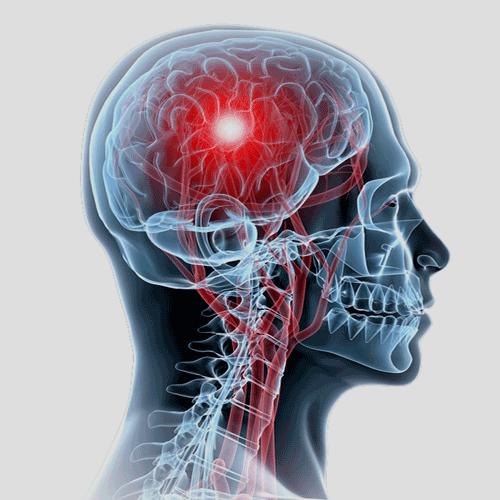
The Brain (Part 1)
Exercise: The Missing Link in Longevity & Cognitive Health
When I talk about exercise with patients, I typically start with what most people understand: its role in building lean muscle mass. Muscles are one of the most powerful regulators of metabolic health. It improves insulin sensitivity, supports healthy weight, strengthens bone, and preserves stability and balance as we age. These are essential components of longevity.
But what is becoming increasingly clear – both in the research and in clinical practices – is that exercise is just as critical for the brain as it is for the body. In fact, it may be one of the most important tools we have to preserve cognitive function and protect against long-term neurodegenerative decline.
Many people experience early signs of reduced cognitive efficiency without recognizing them as such. They describe difficulty focusing, slower processing, mental fatigue, or a sense that their brain is not performing the way it once did. Often, this is attributed to stress, aging, or poor sleep. While those factors certainly play a role, there is another underlying driver that is frequently overlooked: a lack of sufficient physiological fitness to support optimal brain function.
At the center of this connection is a protein called brain-derived neurotrophic factor, or BDNF. BDNF plays a critical role in maintaining and strengthening neural networks. It enhances communication between brain cells, supports neuroplasticity, improves cerebral blood flow, and optimizes energy production within the brain. These are the exact processes required for focus, memory, decision-making, and long-term cognitive resilience.
What is particularly important—and often missed—is that your brain’s ability to utilize exercise as a stimulus for producing BDNF is dependent on your level of fitness. Recent research published in Brain Research demonstrated that individuals who are deconditioned do not experience the same neurological response to exercise as those who are more fit. In other words, simply “moving your body” is not always enough to generate meaningful cognitive benefit. The body must first build the underlying cardiovascular and metabolic capacity that allows the brain to respond.
In this study, sedentary individuals were followed through a structured 12-week exercise program. Early in the process, there were minimal changes in brain response. But as cardiovascular fitness improved—measured by increases in VO₂ max—the brain began to respond more robustly. BDNF production increased, cognitive performance improved, and brain imaging showed more efficient activity in the prefrontal cortex, the region responsible for focus, executive function, and decision-making.
This reinforces a principle I emphasize often: the brain is not separate from the body—it is dependent on it. If oxygen delivery, mitochondrial function, vascular health, and metabolic signaling are suboptimal, the brain cannot perform at its highest level. As these systems improve through consistent training, the brain becomes more efficient, more adaptable, and more resilient.
There is also a powerful compounding effect. As fitness improves, the brain’s response to exercise strengthens. As the brain becomes more efficient, focus and mental clarity improve. This, in turn, supports better consistency and adherence to healthy behaviors. Over time, this creates a reinforcing cycle that enhances both physical and cognitive performance.
One of the most important clinical takeaways is that these benefits are not immediate, they are adaptive. In the study, meaningful changes did not occur at six weeks. They emerged closer to twelve weeks, once the body had built sufficient capacity. This is a critical point for patients who feel discouraged early in an exercise program. Lack of immediate cognitive improvement does not mean the intervention is ineffective, it means the system is still adapting.
From a practical standpoint, the goal is not random or inconsistent activity, but the intentional development of fitness. This includes a combination of daily movement such as walking, resistance training to build and preserve muscle, moderate cardiovascular work to improve mitochondrial and vascular function, and periodic higher-intensity efforts to further stimulate adaptation. Walking is often the most effective entry point, particularly for those who are deconditioned, as it supports metabolic and neurological health without overwhelming the system.
Equally important is learning to recognize the feedback your brain provides. As fitness improves, many patients begin to notice that after exercise, their thinking is clearer, their focus is sharper, and their decision-making is more efficient. This is not subjective—it reflects real-time improvements in brain function. Over time, exercise shifts from being something you “should do” into a tool that actively enhances how you think and perform.
When we step back and look at the broader picture, this connection becomes even more significant. Declining cognitive function is one of the most feared aspects of aging, and conditions such as dementia and Alzheimer’s disease are deeply influenced by metabolic health, vascular integrity, and inflammation—all of which are directly impacted by exercise.
This is why I view exercise not simply as a lifestyle recommendation, but as a cornerstone of both symptom optimization and disease prevention. It is one of the most accessible and powerful interventions we have to support brain health, preserve independence, and protect long-term quality of life.
Ultimately, exercise is not just about building a stronger body. It is about building a brain that is more resilient, more efficient, and better equipped to support you in every aspect of your life—now and in the decades ahead.