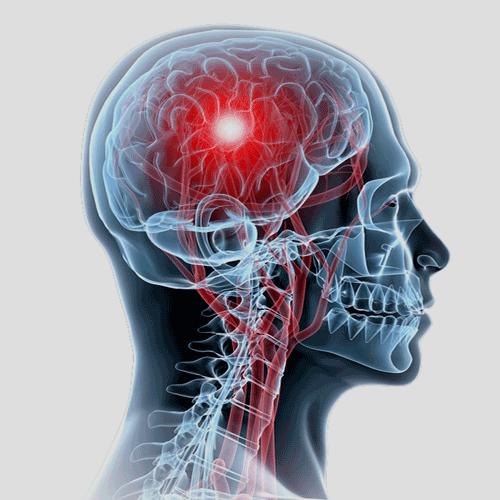
The Brain (Part 2)
Stress, Brain Health & Why We Measure What Most Practices Don’t
When we think about brain health, most people immediately focus on memory—how to preserve it and what happens when it begins to decline. But what we now understand, both in the research and in clinical practice, is that the changes leading to cognitive decline begin long before memory loss ever appears. One of the earliest and most important drivers of those changes is something we all experience every day: stress. Not just emotional stress, but the biochemical effects of stress inside the body.
Two hormones play a central role in how your brain responds to stress over time: cortisol and DHEA sulfate, or DHEA-S. Cortisol is your primary stress hormone. In short bursts, it is helpful—it keeps you alert, focused, and able to respond to challenges. But when cortisol remains elevated over time, it begins to have the opposite effect. It increases inflammation, interferes with memory formation, and places strain on the brain’s ability to repair and regenerate. DHEA-S serves as a natural counterbalance, helping protect brain cells, support energy production, and stabilize cognitive function. What matters most is not just the level of each hormone, but the balance between them. When cortisol dominates and DHEA-S is not adequately supporting it, the brain becomes more vulnerable to decline over time.
What is particularly important is that this imbalance does not start when symptoms appear. It begins quietly, often years before any noticeable cognitive changes. Patients will describe feeling mentally fatigued, having difficulty focusing, or noticing subtle lapses in memory. They may feel more overwhelmed or less resilient than they used to. These are often early signals that the brain is under stress at a biochemical level—not just an emotional one. If left unaddressed, this environment can gradually impact how the brain functions and adapts over time.
This is exactly why, in our practice, we approach stress differently. At your visits, we always talk about stress, but we do not stop at how it feels. Of course, your subjective experience matters, and we often ask you to rate your stress on a scale from one to ten. But we also go a step further and measure the biochemical effects of stress through lab testing—specifically cortisol and DHEA sulfate levels. This gives us a much clearer picture of how your body is actually responding. Two people can both feel like their stress is a “seven,” but their physiology may look completely different, and that difference is critical when it comes to brain health, hormone balance, and long-term disease risk.
Another important shift in how we think about stress is recognizing that it is not just emotional—it is deeply tied to energy and metabolism. When the body is not producing energy efficiently, whether due to poor sleep, hormonal changes, nutrient deficiencies, or metabolic imbalance, it compensates by increasing cortisol. Over time, this creates a cycle of elevated stress hormones, reduced resilience, increased inflammation, and impaired brain function. Breaking that cycle requires more than just trying to relax. It requires supporting the systems that regulate energy, hormones, and recovery.
From a practical standpoint, protecting your brain begins with supporting this balance. Prioritizing sleep, maintaining stable blood sugar, incorporating consistent movement, and creating space for recovery all play a role. For many women, especially in perimenopause and menopause, optimizing hormone balance is also a critical piece of the puzzle. These are not small interventions—they are foundational to how your brain functions both now and in the future.
What this ultimately reinforces is something I emphasize often: your brain health is being shaped every day, long before symptoms appear. When we understand how stress is affecting the body—and take the step to actually measure it—we have the opportunity to intervene earlier, more precisely, and far more effectively. This is not about waiting for decline. It is about creating an internal environment where your brain can remain strong, resilient, and capable for decades to come.