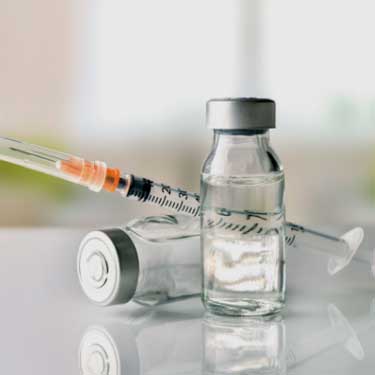
The Hidden Risk of GLP-1 Medications
Why Losing Weight Isn’t Enough – Especially During Perimenopause & Menopause
By Ruthie Harper, MD
GLP-1 medications have transformed the treatment of obesity. Drugs such as semaglutide and tirzepatide have helped millions of people lose significant amounts of weight, improve blood sugar regulation, reduce the risk of Type 2 diabetes, and, in many cases, improve quality of life. For the right patient, these medications can be life-changing.
But there is an important conversation that isn’t happening often enough.
Not all weight loss is healthy weight loss.
The number on the scale doesn’t tell us what your body is actually losing. Is it fat? Muscle? Water? Or some combination of all three? Without measuring body composition throughout treatment, there is simply no way to know.
This distinction becomes especially important for women in perimenopause and menopause.
As estrogen declines, the body naturally begins to lose muscle mass in a process known as sarcopenia. Beginning in our 30s, we gradually lose muscle each decade, but that process accelerates dramatically during the menopausal transition. At the same time, women become more insulin resistant, body fat shifts toward the abdomen, and building new muscle becomes considerably more difficult than it was in earlier years.
Muscle is far more than something that helps us look toned.
It is one of the body’s largest metabolic organs.
Healthy muscle improves insulin sensitivity, stabilizes blood sugar, protects bone density, supports balance and mobility, increases resting metabolic rate, and serves as one of the strongest predictors of healthy aging and independence later in life. In many ways, muscle is one of our greatest longevity assets.
Unfortunately, when calorie intake drops dramatically—as it often does with GLP-1 medications—the body doesn’t lose only fat. Unless protein intake, resistance training, and body composition are carefully monitored, a meaningful portion of the weight lost may come from lean muscle.
This matters because the body can replace fat much more easily than it can replace muscle.
For a woman in her 20s or 30s, rebuilding muscle after weight loss is generally achievable with consistent strength training and adequate nutrition. For a woman in perimenopause or after menopause, the challenge is often much greater. Declining estrogen reduces the body’s ability to build and preserve muscle, making recovery slower and, in some cases, incomplete. The goal should never be simply to lose weight—it should be to lose fat while preserving as much lean muscle as possible.
This is why I tell my patients that GLP-1 medications are tools, not complete treatment plans.
The medication decreases appetite, but it doesn’t teach your body what to preserve.
That requires a thoughtful strategy.
One of the first priorities is adequate protein intake. Many patients naturally eat much less while taking GLP-1 medications because they simply aren’t hungry. While this helps reduce calories, it also makes it surprisingly easy to consume far too little protein. Without enough dietary protein, the body has fewer building blocks available to maintain muscle tissue.
Equally important is progressive resistance training. Walking is wonderful for cardiovascular health, but it is not enough to preserve muscle during rapid weight loss. Strength training sends the message that your muscles are needed and should be maintained. Combined with sufficient protein, it becomes one of the most effective ways to protect lean body mass.
At our practice, we also believe in measuring what matters.
Rather than relying solely on the bathroom scale, we routinely evaluate body composition, looking at how much weight is coming from fat versus lean muscle. If muscle loss is occurring, we can adjust nutrition, exercise, medication dosing, or the pace of weight loss before significant losses accumulate.
This approach is particularly important because rapid weight loss isn’t always the healthiest weight loss.
Our goal is not to make patients smaller.
Our goal is to make them healthier.
That means lowering visceral fat while preserving—or even building—lean muscle, improving metabolic health, protecting bone density, maintaining strength, and supporting long-term function.
Weight is only one number.
Body composition tells the real story.
For many women, especially those entering perimenopause or menopause, the years ahead will be defined not by the number on the scale, but by how much muscle they are able to maintain. Muscle determines how strong you are, how independently you move, how efficiently you burn calories, how healthy your metabolism remains, and even how well you age.
GLP-1 medications can absolutely be part of that journey.
But they should never be the entire plan.
When combined with personalized nutrition, adequate protein, progressive strength training, body composition analysis, and ongoing medical supervision, these medications become far more than weight-loss drugs. They become tools to improve metabolic health while protecting one of your body’s most valuable assets—your muscle.
Because the goal isn’t simply to lose weight.
It’s to build a healthier, stronger body that will carry you through the decades ahead.
Side bar
How Our GLP-1 Program Is Different
A prescription is only one piece of successful weight loss.
At our practice, our goal isn’t simply to help you lose weight—it’s to help you lose fat while preserving muscle, especially during perimenopause and menopause when maintaining muscle becomes more challenging.
Our comprehensive GLP-1 program includes:
✔ Body composition analysis to track fat versus muscle loss
✔ Personalized protein goals to protect lean muscle
✔ Strength-training recommendations to preserve metabolism and bone health
✔ Advanced metabolic testing, including fasting insulin and HbA1c
✔ Continuous Glucose Monitoring (CGM), when appropriate, to understand how food, sleep, stress, and exercise affect your metabolism
✔ Ongoing physician guidance to adjust your plan as your body changes
Our philosophy is simple: We don’t just want you to weigh less—we want you to be stronger, healthier, and more metabolically fit for years to come.
If you are interested in losing weight, optimizing your metabolism, increasing energy, and improving your health, we can design a personalized program based on your goals, physiology, and long-term wellness strategy. Call our office today: 512 343 9355