
Acupuncture FAQs – Answers to Your Questions
Frequently Asked Questions About Acupuncture
Acupuncture has been practiced for thousands of years, yet it remains one of the treatments patients ask the most questions about before trying it. Curiosity about the needles is usually first, followed closely by questions about what conditions respond, how many visits are needed, and whether the results hold up under scientific scrutiny.
Those questions deserve straight answers. At Ruthie Harper, MD in Austin, TX, acupuncture is provided by Siren Törnqvist, who holds a Master’s degree in Traditional Chinese Medicine and Acupuncture, under the supervision of internationally recognized fertility expert and functional medicine specialist Dr. Ruthie Harper. Below are the questions patients raise most often.
What Is Acupuncture and How Does It Work?
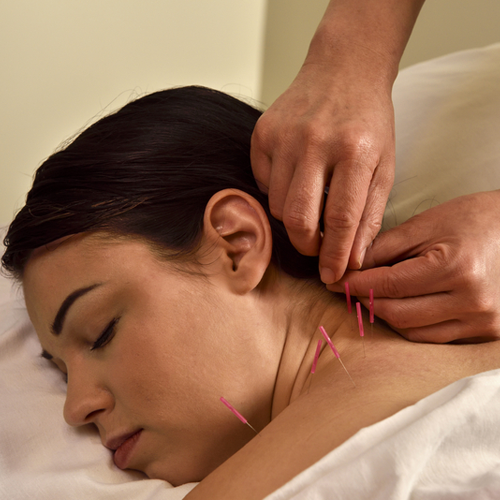
Acupuncture involves placing very fine sterile needles at specific points on the body. In Traditional Chinese Medicine, these points sit along pathways that carry the body’s vital energy, and stimulating them restores balanced flow where it has become blocked or depleted.
Contemporary research describes the same effects in physiological terms. Needle placement stimulates sensory nerves, prompting the release of endorphins and other signaling molecules, shifting the nervous system toward its rest-and-recovery state, and producing measurable changes in local blood flow.
Is Acupuncture Painful?
Most patients are surprised by how little they feel. Acupuncture needles are roughly the width of a human hair and nothing like the hollow needles used for injections or blood draws, so insertion usually registers as a brief tap or nothing at all.
Once needles are in place, patients commonly describe a dull heaviness, warmth, or mild tingling at the site. These sensations are expected and typically fade within a minute or two, and many people find the remainder of the session deeply relaxing.
What Conditions Can Acupuncture Treat?
The World Health Organization has recognized acupuncture as useful for a broad range of conditions, and it is most commonly sought for chronic pain, headaches and migraines, digestive complaints, anxiety, insomnia, and fatigue. It is also widely used for fertility support, menstrual irregularity, and the symptoms of perimenopause and menopause.
Because acupuncture works by influencing the nervous, circulatory, and endocrine systems, its usefulness is not confined to a single organ or diagnosis. Siren Törnqvist reviews each patient’s full history before recommending a course of care.
How Many Acupuncture Sessions Are Typically Needed?
Acupuncture works cumulatively, so a single visit rarely tells the whole story. Acute problems sometimes respond within a few sessions, while chronic conditions generally call for weekly treatment over six to twelve weeks before the full picture becomes clear.
Fertility care follows its own timeline, often planned across three months to cover a complete cycle of egg maturation or sperm production. Once improvement holds, visits are usually spaced further apart for maintenance.
What Happens During an Acupuncture Appointment?
A first visit begins with an extended conversation covering medical history, current symptoms, sleep, digestion, stress, and menstrual patterns where relevant. Pulse and tongue examination, both traditional diagnostic tools, may also be part of the assessment.
Needles are then placed and left in for roughly twenty to thirty minutes while the patient rests in a quiet, dimly lit room. Most people remain comfortable throughout, and a number fall asleep before the session ends. Follow-up visits are shorter, since the intake is already complete and treatment can begin within a few minutes of arrival.
Are Acupuncture Needles Safe?
Needles used in clinical practice are single-use, pre-sterilized, and disposed of immediately afterward, which removes any possibility of transmission between patients. Licensed practitioners complete extensive training in anatomy and safe depth and angle of insertion.
Side effects are uncommon and minor when they occur, most often slight bruising or brief lightheadedness. Acupuncture is regarded as one of the safest therapies available when performed by a properly credentialed practitioner such as Siren Törnqvist at Ruthie Harper, MD in Austin, TX.
How Quickly Do Acupuncture Results Appear?
Many patients notice better sleep and reduced tension within the first week, since the calming effect on the nervous system tends to show up early. Pain relief often follows over the next several sessions.
Changes involving hormones, cycles, or fertility take longer because they depend on biological processes that unfold over weeks or months. Patience during this period is part of the treatment rather than a sign that it is not working.
Is Acupuncture Safe During Pregnancy?
Acupuncture is used during pregnancy for nausea, back and pelvic pain, fatigue, and sleep difficulty, and it offers an option for women who want to limit medication use. Certain points are avoided during pregnancy, which is why practitioner training matters.
Any pregnant patient considering acupuncture should confirm it with her obstetric provider first, and treatment should be delivered by a practitioner experienced in prenatal care.
Can Acupuncture Complement Conventional Medical Treatment?
It absoluetly can, and integration (rather tahn replacement) is the point. Acupuncture is routinely used alongside prescription medication, physical therapy, hormone balancing, and other traditional medical treatments for a comprehensive approach to a wide variety of medical conditions.
Top Austin, TX acupuncturist Siren Törnqvist works under direct physician supervision, so acupuncture is coordinated with laboratory testing, medication timing, and any care being managed by other specialists. Patients receive one integrated plan instead of several separate ones.
How Should Patients Choose an Acupuncture Provider?
Credentials come first. Look for formal graduate training in Traditional Chinese Medicine, appropriate state licensure, and demonstrated experience with the specific concern being treated, since fertility, pain, and mental health each call for different expertise.
Physician oversight adds another layer of value, particularly when hormones, fertility, or complex medical histories are involved. At Ruthie Harper, MD in Austin, TX, acupuncture care is supervised by Medical Doctor Ruthie Harper, whose functional medicine practice supplies the diagnostic testing and medical treatments that are needed beyond acupuncture, when necessary.
Acupuncture | Austin, TX
If you have been curious about acupuncture but were not sure whether it applied to your situation, the answer is usually best determined through conversation rather than research. Your history, your symptoms, and your goals shape what a course of acupuncture treatment would look like.
To ask your own questions and find out whether acupuncture fits your health picture, schedule an appointment with Siren Törnqvist at Dr. Ruthie Harper’s office in Austin, TX. You will get clear answers and a plan built around what you actually need.
Austin, TX Acupuncture: 512-343-9355